
When Nights Change After 65

Understanding sleep changes in older age – and why they matter
Ramesh uncle wakes up every morning at 5 a.m.
Not because he wants to.
Not because he has work.
He just opens his eyes – and sleep doesn’t come back.
By afternoon, he feels tired. By evening, he dozes off in front of the TV. At night, sleep again feels broken.
Many families assume this is “just old age.”
But the truth is more nuanced.
Sleep naturally changes after 65. Understanding these changes helps families worry less and support elders better.
Light Sleep: “I sleep, but I don’t feel rested”
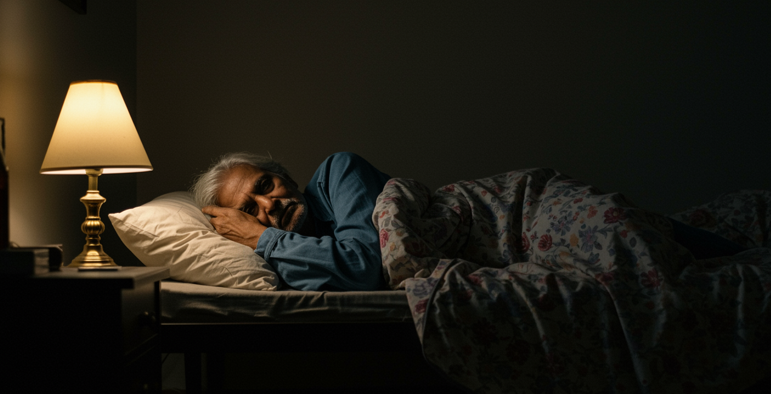
One of the biggest changes after 65 is lighter sleep.
As we age, the body produces less deep sleep (also called slow-wave sleep). This is the stage that makes us feel refreshed.
That’s why many elders say:
- “I slept the whole night, but still feel tired.”
- “Every small sound wakes me up.”
Things like:
- door noises
- fan sounds
- someone walking past
can break sleep easily.
This is normal aging – not laziness, not weakness.
Night Awakenings: The small interruptions
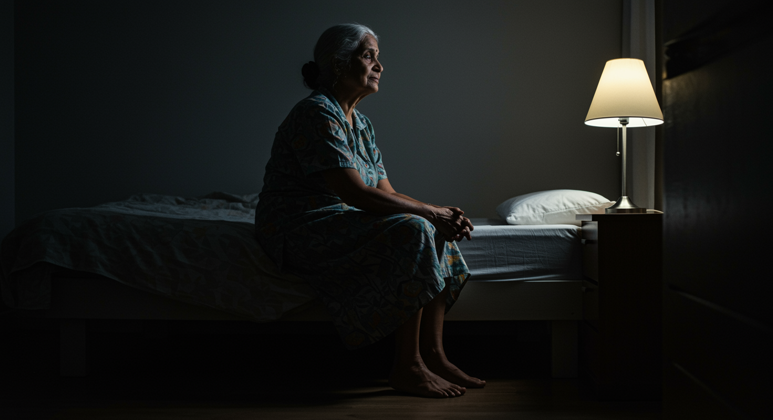
Older adults often wake up several times at night.
Common reasons include:
- Needing to use the bathroom
- Joint pain or stiffness
- Acid reflux or discomfort
- A changing body clock
For example, a senior may fall asleep at 10 p.m., wake at 1 a.m., again at 3 a.m., and struggle to fall back asleep.
These repeated awakenings make sleep feel fragmented, even if total hours look okay.
This is very common in Indian seniors, especially those with diabetes, arthritis, or blood pressure issues.
Early Bedtime: Falling asleep at 9, waking at 5

Many elders start sleeping early – sometimes as early as 8:30 or 9 p.m.
Then they wake up around 4 or 5 a.m.
This happens due to a natural shift in the body’s internal clock, called advanced sleep phase.
It means:
- the body feels sleepy earlier
- the body wakes up earlier
Families often say:
“Why are they awake so early now?”
It’s not habit.
It’s biology.
Less Melatonin: The hormone that slows down
Melatonin is the hormone that tells our brain it’s time to sleep.
After 65, melatonin production reduces.
Because of this:
- falling asleep takes longer
- sleep breaks easily
- night sleep feels shallow
That’s also why elders may feel sleepy during the day but alert at night.
This change is natural and happens gradually with age.
Why It Matters: Sleep and daily strength
Poor sleep doesn’t only affect nights – it affects days too.
Long-term poor sleep can contribute to:
- low energy
- mood changes and irritation
- memory problems
- weaker immunity
- higher risk of falls
- worsening of heart and metabolic health
Good sleep helps seniors:
- stay emotionally stable
- think clearly
- move safely
- feel more independent
That’s why sleep care is not a luxury – it’s part of healthy aging.
How to Sleep Better: Small changes, big difference
The good news: small daily habits can improve sleep quality.
Helpful practices include:
• Keeping a fixed sleep routine
Going to bed and waking up at the same time daily helps reset the body clock.
• Morning sunlight
15–20 minutes of morning sunlight helps regulate sleep hormones naturally.

• Gentle physical activity
Walking, light stretching, or physiotherapy improves night sleep.
• Limiting long daytime naps
Short naps are okay, but long afternoon sleep can disturb nights.
• Reducing evening tea or coffee
Caffeine stays longer in older bodies.
• Calm evenings
Soft lighting, light dinner and reduced screen time help the brain slow down.
These are simple steps – but very powerful when followed regularly.
A gentle reminder for families
Sleep after 65 will never look the same as it did at 40.
And that’s okay.
What elders need most is not pressure to “sleep properly” – but understanding, patience, and routine.
When families understand these natural changes, nights become less stressful – for everyone.
Because aging doesn’t mean losing rest.
It simply means learning a new rhythm.
This blog is intended for general awareness and informational purposes only. It should not be considered medical, legal, or professional advice. Individual needs and care requirements may vary. Readers are advised to consult qualified professionals and verify details directly before making any care-related decisions.